Introduction
Compressed air plays an important role in many industrial operations. From pneumatic machinery and production equipment to packaging and manufacturing processes, many plants depend on compressed air every day.
However, compressed air can also be wasted without being easily noticed.
Small air leaks, damaged fittings, incorrect pressure settings and inefficient distribution systems can gradually increase electricity consumption and operating costs. In many plants, these problems continue for months because the actual compressed air loss has never been measured.
A compressed air system assessment helps industries identify where compressed air is being wasted, measure losses and find practical opportunities to reduce energy costs.
What Is a Compressed Air Audit?
A compressed air audit is a detailed assessment of the complete compressed air system — starting from the compressor room and continuing through the distribution pipeline to the final point of use.
The main purpose of this energy efficiency audit is to identify air leakages, pressure-related issues and other areas where energy may be wasted.
Advanced tools such as ultrasonic leak detectors help identify compressed air leaks that may be difficult to hear during normal plant operations.
Once identified, leakage points can be documented and measured. This helps the plant understand the potential energy and financial impact of compressed air leakage.
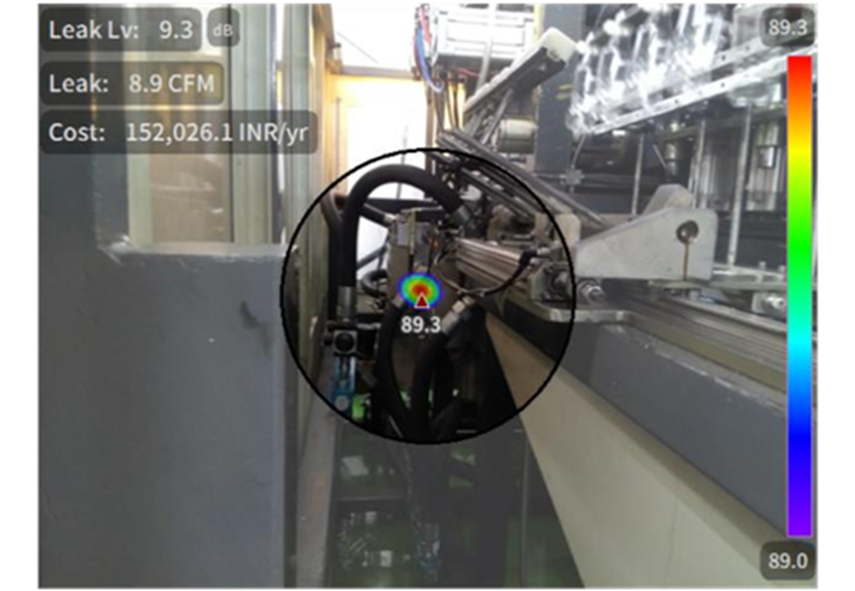
Ultrasonic leakage study showing measured air loss in CFM and estimated annual cost impact.
Why Is a Compressed Air System Assessment Important?
Compressed air is widely used in manufacturing facilities and is often referred to as the fourth utility in industrial operations.
However, compressed air systems may not always receive the same level of energy monitoring as electricity, water or fuel.
Regular air system reviews are important because:
- Air leaks can gradually develop at joints, fittings and pneumatic equipment.
- Small leaks may continue wasting compressed air for long operating hours.
- Higher-than-required pressure can increase energy consumption.
- Poor maintenance may affect compressed air system efficiency and reliability.
- Continuous compressor operation can increase electricity and maintenance costs.
A professional compressed air energy efficiency assessment provides actual system data and helps maintenance teams identify areas for improvement.
What Does a Compressed Air Audit Cover?
A comprehensive compressed air audit may include:
- Air compressors and compressor room
- Air treatment equipment, including dryers and filters
- Compressed air distribution piping network
- Pneumatic machinery and end-use applications
- Pressure regulation and control systems
- Ultrasonic compressed air leak detection
- Leak identification and documentation
- Leakage measurement and quantification
- Compressed air efficiency assessment
- Potential energy and cost savings evaluation
The objective is to evaluate the complete compressed air system instead of focusing only on the compressor.
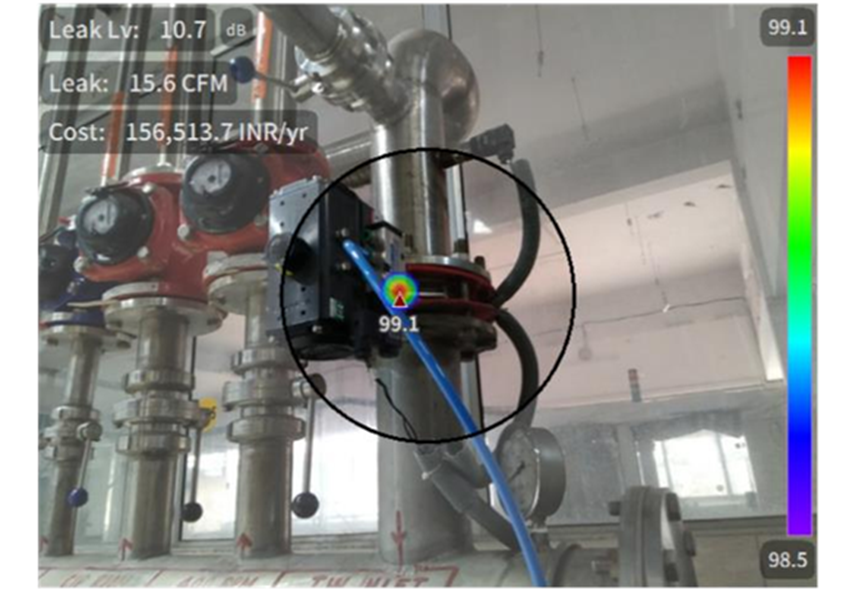
Leakage measurement during a compressed air system assessment at an industrial piping connection.
Common Compressed Air Leakage Points
Compressed air leaks can occur at several locations across an industrial facility. Common leakage points include:
- Pipe joints and threaded connections
- Couplings and hose fittings
- PU connectors
- Pressure regulators
- Control valves
- Header lines
- Distribution manifolds
- Pneumatic machinery
- Equipment seals
- Old or poorly maintained isolation valves
A single small leak may not appear significant. However, when multiple leakage points are present across a plant, the total compressed air loss can increase considerably.
Identifying and repairing these leaks can help reduce unnecessary compressor load and energy consumption.
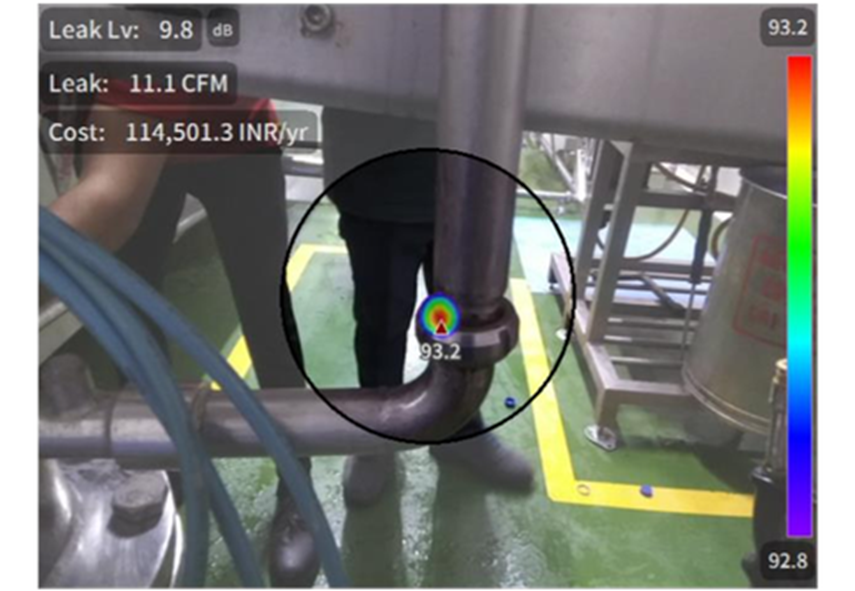
Ultrasonic leak detection identifying compressed air loss at a pipeline connection.
Benefits of a Compressed Air Energy Efficiency Audit
A compressed air system review can provide several benefits to industrial plants:
- Better visibility of compressed air system performance
- Identification and documentation of air leakage points
- Prioritisation of critical leaks
- Potential energy savings of 7–30%
- Improved compressed air system stability
- Reduced unnecessary compressor load
- Improved equipment service life
- Lower maintenance and operating costs
- Better data for maintenance and investment decisions
Actual savings may vary depending on the condition of the compressed air system, operating pressure, leakage level and plant operating hours.
What Do You Receive After the Audit?
A professional air system assessment provides more than a simple plant inspection. After the audit, the plant may receive:
- Complete leakage measurement data
- Identification of compressed air leak locations
- Leak documentation and prioritisation
- Photographs and visual documentation
- Cost analysis of identified leakage points
- Estimated annual energy loss
- Potential annual cost savings calculation
- Compressed air efficiency improvement recommendations
This information helps maintenance and management teams plan corrective actions based on actual system data. The audit report can also be used as a reference for future maintenance and compressed air system improvement planning.
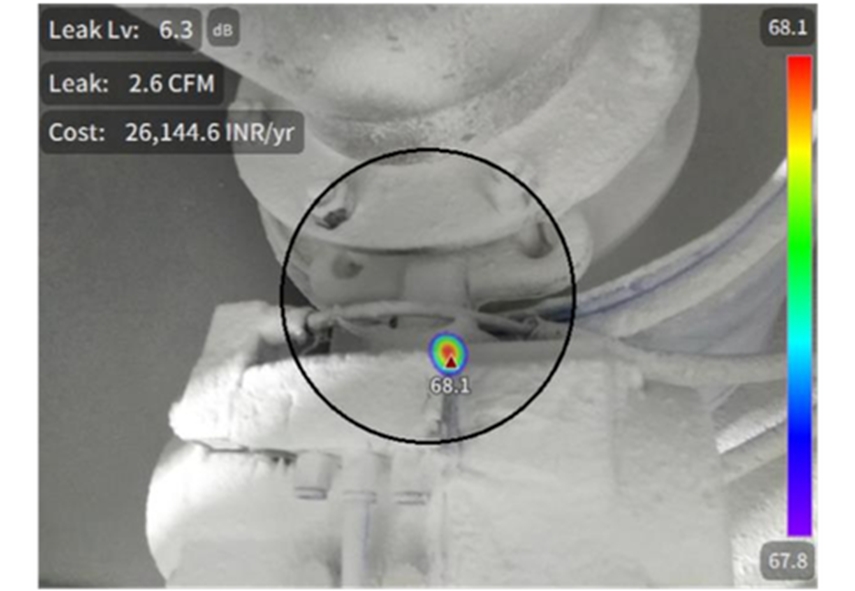
Documented leakage point with measured CFM loss and estimated annual energy cost.
Real Results: Compressed Air Audit Case Study
| Case Study Parameter | Details |
| Client | Coca-Cola Bottling Partner, Uttar Pradesh |
| Problem Identified | Multiple compressed air leakages at moulding machines, Sugar Dumping Yard, air regulators, PU connectors and header lines |
| Solution Provided | Complete Compressed Air Energy Efficiency Audit with leak identification, documentation and leakage quantification |
| Energy Savings | 8% |
| Estimated Annual Savings | ₹18,29,218 |
| Outcome | Reduced compressed air losses and identified practical opportunities to improve energy efficiency |
Does Your Plant Need a Compressed Air System Review?
Your industrial facility may benefit from a compressed air audit if:
- Compressors operate continuously even during low production periods.
- Compressed air leakage has never been measured in CFM.
- System pressure settings have not been reviewed recently.
- Electricity costs have increased without a clear reason.
- Air leakage sounds can be heard near pipelines or fittings.
- The compressed air system has not been professionally assessed for more than a year.
If your plant is experiencing several of these issues, an energy efficiency audit may help identify potential energy-saving opportunities.
Why Choose Aeroflon for Compressed Air Audit Services?
With over 30 years of industrial experience, Aeroflon Engineers Pvt. Ltd. provides compressed air system assessment and energy efficiency audit services for industrial applications.
Our services include:
- Advanced ultrasonic leak detection
- Multi-brand compressor system expertise
- Accurate leakage measurement and analysis
- Energy loss and cost savings assessment
- Detailed leak documentation
- Practical compressed air efficiency recommendations
- Professional audit reports with visual documentation
- Engineering and technical support
As an independent aftermarket compressor specialist, Aeroflon works with industrial customers across multiple sectors and supports customers in India and international markets.
Frequently Asked Questions About Compressed Air Audits
1. What is a compressed air audit?
A compressed air audit is a detailed assessment of an industrial compressed air system. It helps identify air leaks, pressure issues and areas where compressed air and energy may be wasted.
2. How can a compressed air audit reduce energy costs?
A leakage study identifies leakage points and system inefficiencies that increase compressor load and electricity consumption. Repairing leaks and improving system performance can help reduce unnecessary energy costs.
3. How much energy can be saved through a compressed air audit?
Potential energy savings may range from 7% to 30%, depending on the condition of the compressed air system, leakage levels, operating pressure and plant operating hours.
4. How are compressed air leaks detected?
Compressed air leaks can be identified using ultrasonic leak detection equipment. This technology helps locate leaks that may be difficult to hear during normal industrial operations.
5. How often should a compressed air system be audited?
Industrial compressed air systems should be reviewed regularly. A professional assessment may be considered annually or when energy consumption increases, compressor operating hours rise or system performance changes.
6. What is included in a compressed air audit report?
An audit report may include leak location details, photographs, leakage measurement data, estimated energy loss, potential annual cost savings and recommendations for improving compressed air system efficiency.
7. Does Aeroflon provide compressed air audit services for multi-brand compressor systems?
Yes. Aeroflon Engineers Pvt. Ltd. has experience with multi-brand compressed air systems and provides compressed air energy efficiency audit services for industrial applications.
Improve Your Compressed Air System Efficiency
Compressed air leakage can increase energy consumption and operating costs without being easily noticed.
A Compressed Air Energy Efficiency Audit can help identify leakage points, measure compressed air losses and provide clear recommendations for improving system efficiency. To schedule a compressed air audit for your plant, contact Aeroflon Engineers Pvt. Ltd. at +91 77900 67900 or email us at info@aeroflon.com