Introduction
Air compressors are an essential part of industrial operations across manufacturing, pharmaceuticals, food processing, textiles, automotive, and many other sectors. They power critical equipment and production processes, making their reliability vital for smooth business operations.
Like any industrial machine, an air compressor experiences wear and tear over time. Components such as air filters, oil separators, valves, seals, and gaskets gradually lose their efficiency due to continuous operation. If these parts are not inspected and replaced on time, they can affect compressor performance and lead to costly downtime.
This is where preventive maintenance plays a crucial role. Rather than waiting for equipment to fail, preventive maintenance focuses on routine inspections and timely replacement of air compressor spare parts to keep your compressed air system operating safely, efficiently, and reliably.
What Is Preventive Maintenance?
Preventive maintenance is a planned maintenance strategy that involves inspecting, servicing, and replacing critical compressor components before they fail.
Unlike reactive maintenance, where repairs are carried out only after a breakdown, preventive maintenance helps businesses identify potential issues early and avoid unexpected production interruptions.
A well-maintained air compressor delivers consistent performance, consumes less energy, and requires fewer emergency repairs throughout its operating life.
Why Preventive Maintenance Matters
Ignoring routine maintenance can have a significant impact on both equipment performance and business productivity.
Regular maintenance helps:
- Minimize unexpected compressor failures
- Improve energy efficiency
- Reduce repair and replacement costs
- Extend compressor service life
- Maintain consistent compressed air quality
- Improve workplace safety
- Reduce production downtime
A small investment in preventive maintenance today can prevent expensive repairs tomorrow.
Key Benefits of Preventive Maintenance
1. Reduces Unexpected Downtime
An unexpected air compressor failure can stop an entire production line, causing delays and financial losses.
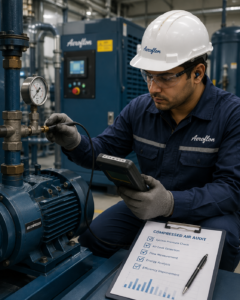
Routine inspections allow maintenance teams to identify worn components before they fail, making it possible to schedule replacements during planned maintenance rather than during emergencies.
2. Improves Energy Efficiency
A compressor with clogged air filters, worn oil separators, leaking valves, or damaged seals must work harder to maintain the required air pressure.
Replacing these components at the recommended intervals improves airflow, reduces power consumption, and lowers operating costs.
3. Extends Compressor Life
Regular maintenance protects important internal components from excessive wear.
Replacing small components before they cause larger failures helps extend the overall lifespan of the compressor and reduces the need for major repairs.
4. Reduces Maintenance Costs
Many costly compressor repairs begin with a simple issue that was ignored.
Replacing an inexpensive filter or seal on time is much more economical than repairing internal compressor damage caused by neglected maintenance.
5. Maintains Air Quality
Industries such as pharmaceuticals, food processing, electronics, and healthcare depend on clean compressed air.
Proper maintenance of filters, oil separators, and air treatment components helps maintain air quality and supports consistent product quality.
Critical Air Compressor Parts That Require Regular Inspection
To ensure reliable compressor performance, inspect these components regularly:
- Air Filters
- Oil Filters
- Air Oil Separators
- Compressor Valves
- Seals and Gaskets
- Bearings
- Hoses and Pipes
- Pressure Gauges
Timely replacement of worn components helps prevent major equipment failures and improves overall system efficiency.
Recommended Preventive Maintenance Schedule
| Component | Inspection Frequency | Replacement Recommendation |
| Air Filter | Weekly | Every 2,000–4,000 operating hours or as recommended by the manufacturer |
| Oil Filter | During every oil change | Replace according to compressor service schedule |
| Air Oil Separator | Monthly | Replace based on operating hours and pressure differential |
| Compressor Valves | Every 3–6 months | Replace if signs of wear or leakage are found |
| Seals & Gaskets | During scheduled maintenance | Replace whenever leakage or damage is detected |
Note: Maintenance intervals may vary depending on the compressor model, operating environment, and manufacturer’s recommendations.
Warning Signs Your Air Compressor Needs Maintenance
Don’t wait until your compressor stops working completely.
Some common signs that indicate maintenance is required include:
- Reduced air pressure
- Higher electricity consumption
- Unusual vibration or noise
- Oil leakage
- Frequent compressor shutdowns
- High operating temperature
- Slow pressure build-up
Addressing these warning signs early can help avoid unexpected downtime and expensive repairs.
Best Practices for Air Compressor Preventive Maintenance
Following a regular maintenance routine helps keep your compressor performing at its best.
Recommended practices include:
- Inspect and clean air filters regularly.
- Change compressor oil according to the service schedule.
- Replace oil filters and oil separators at recommended intervals.
- Inspect valves, seals, and gaskets for wear or leakage.
- Monitor operating pressure and temperature.
- Check for compressed air leaks.
- Maintain accurate service and maintenance records.
A disciplined maintenance program improves reliability and supports long-term operational efficiency.
Expert Tip from Aeroflon Engineers Pvt. Ltd.
Based on our experience working with industrial customers, one of the most common causes of compressor performance issues is delayed replacement of wear components such as air filters and oil separators.
These parts may appear to be in good condition, but over time they become less effective, increasing energy consumption and placing additional stress on the compressor.
Replacing these components at the recommended intervals helps maintain consistent airflow, improves energy efficiency, and protects critical compressor parts from unnecessary wear.
How Aeroflon Engineers Pvt. Ltd. Supports Your Maintenance Needs
At Aeroflon Engineers Pvt. Ltd., we supply high-quality OEM-compatible air compressor spare parts designed to deliver reliable performance across a wide range of industrial applications.
Our product range includes air filters, oil filters, oil separators, valves, seals, gaskets, bearings, and other essential compressor components compatible with leading compressor brands.
In addition to supplying quality spare parts, our experienced team provides technical guidance to help customers select the right components based on their compressor model, operating conditions, and maintenance requirements.
Conclusion
Preventive maintenance is one of the smartest investments you can make to improve the efficiency, reliability, and lifespan of your air compressor system.
Regular inspections and timely replacement of essential spare parts help reduce downtime, lower maintenance costs, improve energy efficiency, and keep industrial operations running smoothly.
At Aeroflon Engineers Pvt. Ltd., we are committed to supporting industries with high-quality OEM-compatible air compressor spare parts and expert technical assistance.
Need help selecting the right compressor spare parts for your equipment? Contact Aeroflon Engineers Pvt. Ltd. today to find the right solution for your industrial maintenance needs.
Frequently Asked Questions (FAQs)
1. How often should an air compressor be serviced?
The service interval depends on the compressor model, operating hours, and working environment. Always follow the manufacturer’s maintenance recommendations.
2. Which air compressor spare parts require regular replacement?
The most commonly replaced parts include air filters, oil filters, oil separators, valves, seals, gaskets, and bearings.
3. Why is preventive maintenance important for industrial air compressors?
Preventive maintenance helps reduce unexpected breakdowns, improve energy efficiency, lower repair costs, extend equipment life, and maintain reliable compressor performance.
4. Can preventive maintenance reduce electricity costs?
Yes. Replacing clogged filters, worn separators, and leaking components helps the compressor operate more efficiently, reducing unnecessary energy consumption.
5. Where can I buy high-quality OEM-compatible air compressor spare parts?
Choose a trusted supplier that offers quality-tested OEM-compatible spare parts along with technical support to ensure reliable compressor performance.