Compressed Air Audit Services in India | Reduce Energy Costs by Up to 30%

Introduction

Compressed air plays an important role in many industrial operations. From pneumatic machinery and production equipment to packaging and manufacturing processes, many plants depend on compressed air every day.

However, compressed air can also be wasted without being easily noticed.

Small air leaks, damaged fittings, incorrect pressure settings and inefficient distribution systems can gradually increase electricity consumption and operating costs. In many plants, these problems continue for months because the actual compressed air loss has never been measured.

A compressed air system assessment helps industries identify where compressed air is being wasted, measure losses and find practical opportunities to reduce energy costs.

What Is a Compressed Air Audit?

A compressed air audit is a detailed assessment of the complete compressed air system — starting from the compressor room and continuing through the distribution pipeline to the final point of use.

The main purpose of this energy efficiency audit is to identify air leakages, pressure-related issues and other areas where energy may be wasted.

Advanced tools such as ultrasonic leak detectors help identify compressed air leaks that may be difficult to hear during normal plant operations.

Once identified, leakage points can be documented and measured. This helps the plant understand the potential energy and financial impact of compressed air leakage.

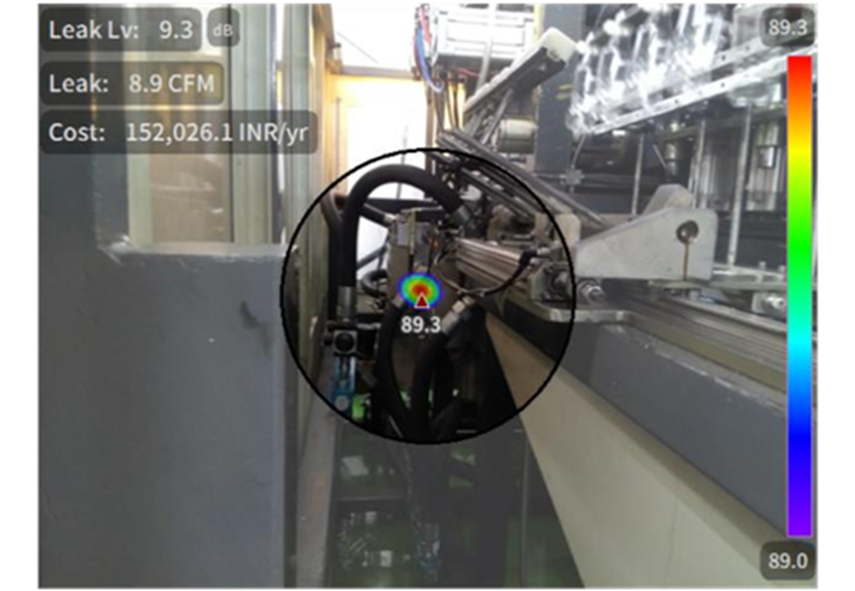
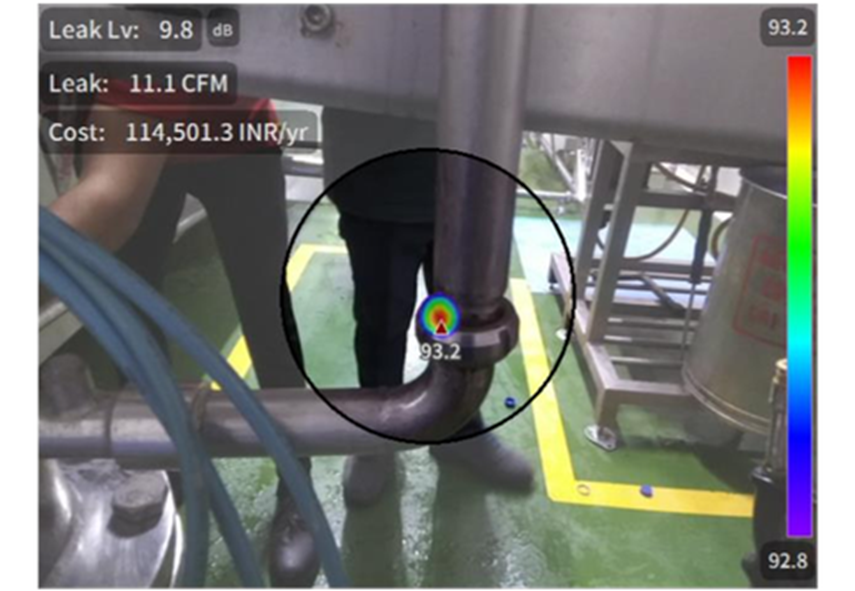
Ultrasonic leakage study showing measured air loss in CFM and estimated annual cost impact.

Why Is a Compressed Air System Assessment Important?

Compressed air is widely used in manufacturing facilities and is often referred to as the fourth utility in industrial operations.

However, compressed air systems may not always receive the same level of energy monitoring as electricity, water or fuel.

Regular air system reviews are important because:

  • Air leaks can gradually develop at joints, fittings and pneumatic equipment.
  • Small leaks may continue wasting compressed air for long operating hours.
  • Higher-than-required pressure can increase energy consumption.
  • Poor maintenance may affect compressed air system efficiency and reliability.
  • Continuous compressor operation can increase electricity and maintenance costs.

A professional compressed air energy efficiency assessment provides actual system data and helps maintenance teams identify areas for improvement.

What Does a Compressed Air Audit Cover?

A comprehensive compressed air audit may include:

  • Air compressors and compressor room
  • Air treatment equipment, including dryers and filters
  • Compressed air distribution piping network
  • Pneumatic machinery and end-use applications
  • Pressure regulation and control systems
  • Ultrasonic compressed air leak detection
  • Leak identification and documentation
  • Leakage measurement and quantification
  • Compressed air efficiency assessment
  • Potential energy and cost savings evaluation

The objective is to evaluate the complete compressed air system instead of focusing only on the compressor.

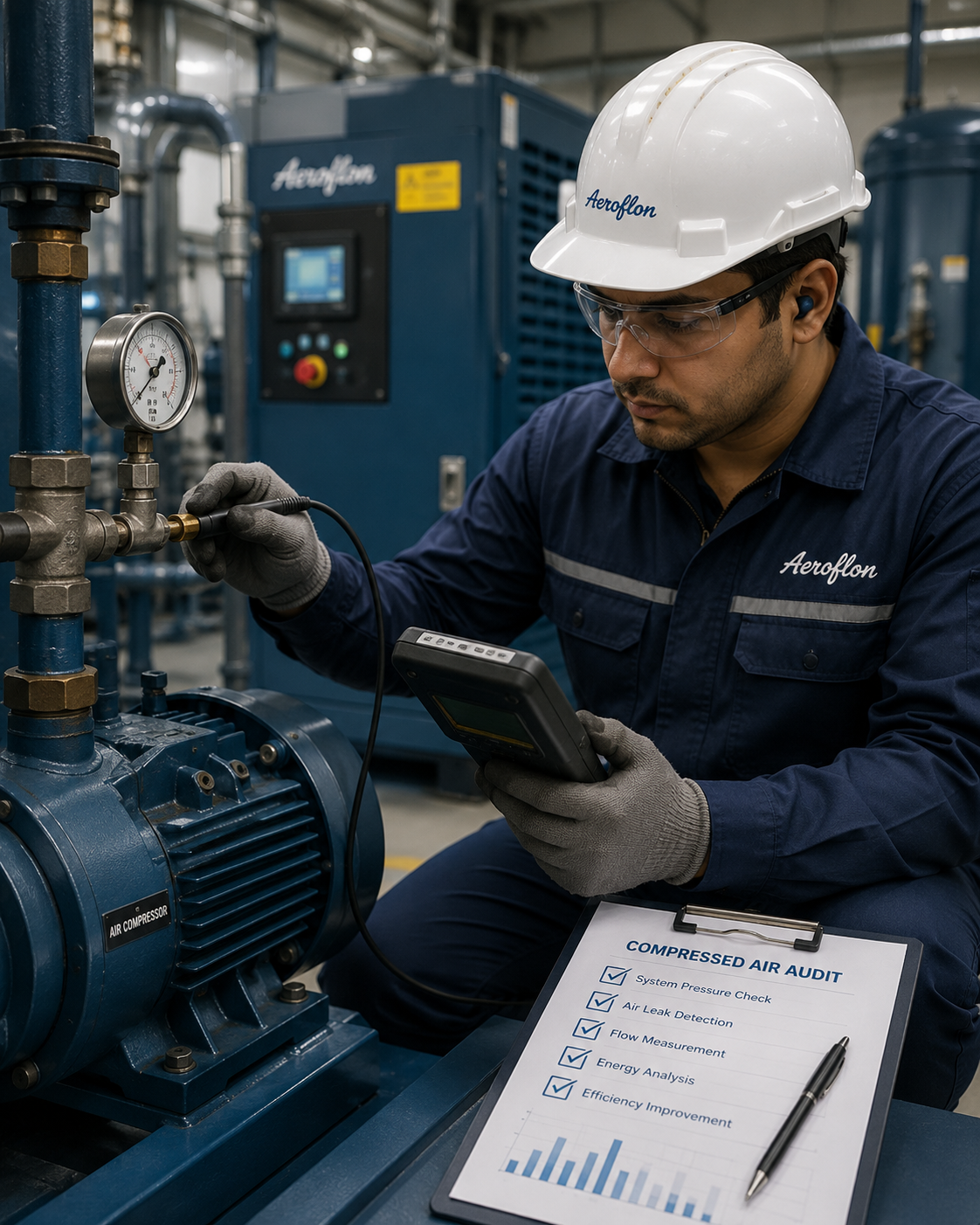
Leakage measurement during a compressed air system assessment at an industrial piping connection.

Common Compressed Air Leakage Points

Compressed air leaks can occur at several locations across an industrial facility. Common leakage points include:

  • Pipe joints and threaded connections
  • Couplings and hose fittings
  • PU connectors
  • Pressure regulators
  • Control valves
  • Header lines
  • Distribution manifolds
  • Pneumatic machinery
  • Equipment seals
  • Old or poorly maintained isolation valves

A single small leak may not appear significant. However, when multiple leakage points are present across a plant, the total compressed air loss can increase considerably.

Identifying and repairing these leaks can help reduce unnecessary compressor load and energy consumption.

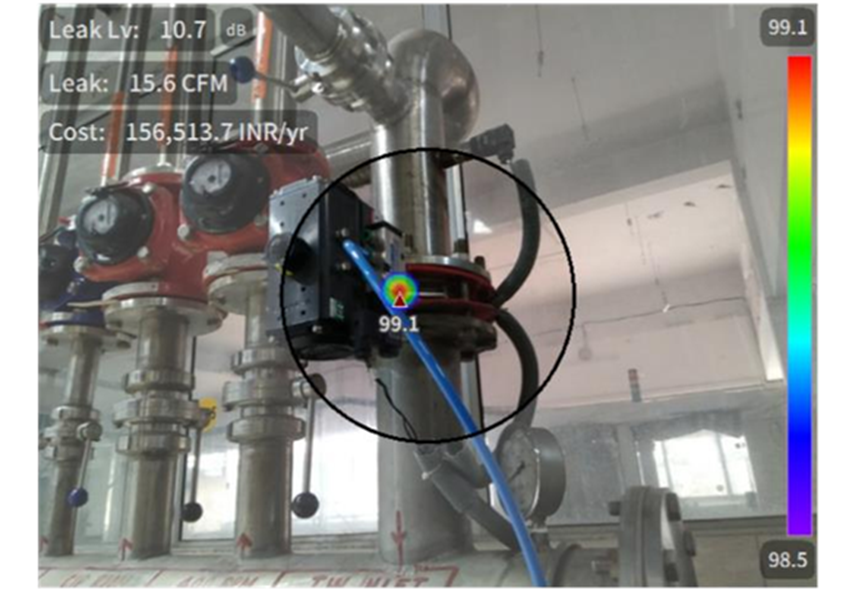
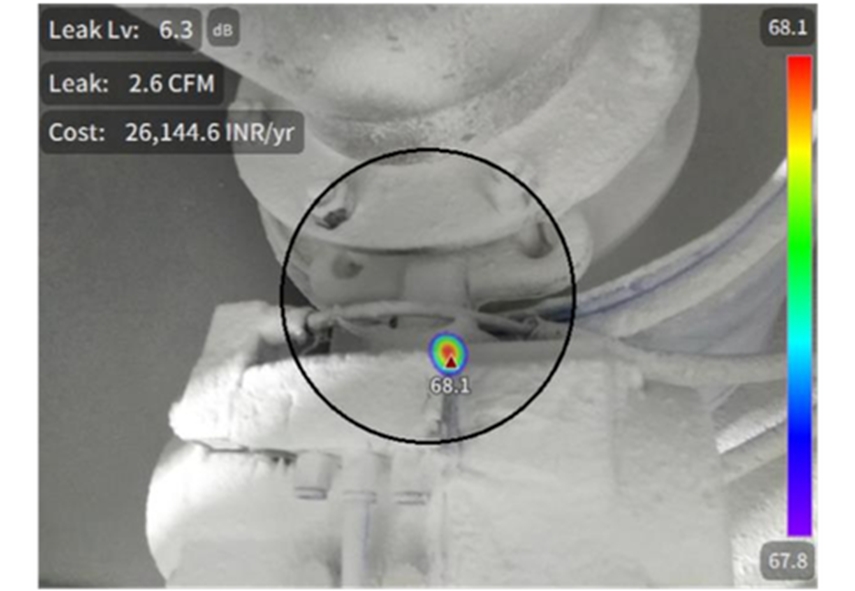
Ultrasonic leak detection identifying compressed air loss at a pipeline connection.

Benefits of a Compressed Air Energy Efficiency Audit

A compressed air system review can provide several benefits to industrial plants:

  • Better visibility of compressed air system performance
  • Identification and documentation of air leakage points
  • Prioritisation of critical leaks
  • Potential energy savings of 7–30%
  • Improved compressed air system stability
  • Reduced unnecessary compressor load
  • Improved equipment service life
  • Lower maintenance and operating costs
  • Better data for maintenance and investment decisions

Actual savings may vary depending on the condition of the compressed air system, operating pressure, leakage level and plant operating hours.

What Do You Receive After the Audit?

A professional air system assessment provides more than a simple plant inspection. After the audit, the plant may receive:

  • Complete leakage measurement data
  • Identification of compressed air leak locations
  • Leak documentation and prioritisation
  • Photographs and visual documentation
  • Cost analysis of identified leakage points
  • Estimated annual energy loss
  • Potential annual cost savings calculation
  • Compressed air efficiency improvement recommendations

This information helps maintenance and management teams plan corrective actions based on actual system data. The audit report can also be used as a reference for future maintenance and compressed air system improvement planning.

Documented leakage point with measured CFM loss and estimated annual energy cost.

 Real Results: Compressed Air Audit Case Study

Case Study ParameterDetails
ClientCoca-Cola Bottling Partner, Uttar Pradesh
Problem IdentifiedMultiple compressed air leakages at moulding machines, Sugar Dumping Yard, air regulators, PU connectors and header lines
Solution ProvidedComplete Compressed Air Energy Efficiency Audit with leak identification, documentation and leakage quantification
Energy Savings8%
Estimated Annual Savings₹18,29,218
OutcomeReduced compressed air losses and identified practical opportunities to improve energy efficiency

Does Your Plant Need a Compressed Air System Review?

Your industrial facility may benefit from a compressed air audit if:

  • Compressors operate continuously even during low production periods.
  • Compressed air leakage has never been measured in CFM.
  • System pressure settings have not been reviewed recently.
  • Electricity costs have increased without a clear reason.
  • Air leakage sounds can be heard near pipelines or fittings.
  • The compressed air system has not been professionally assessed for more than a year.

If your plant is experiencing several of these issues, an energy efficiency audit may help identify potential energy-saving opportunities.

Why Choose Aeroflon for Compressed Air Audit Services?

With over 30 years of industrial experience, Aeroflon Engineers Pvt. Ltd. provides compressed air system assessment and energy efficiency audit services for industrial applications.

Our services include:

  • Advanced ultrasonic leak detection
  • Multi-brand compressor system expertise
  • Accurate leakage measurement and analysis
  • Energy loss and cost savings assessment
  • Detailed leak documentation
  • Practical compressed air efficiency recommendations
  • Professional audit reports with visual documentation
  • Engineering and technical support

As an independent aftermarket compressor specialist, Aeroflon works with industrial customers across multiple sectors and supports customers in India and international markets.

Frequently Asked Questions About Compressed Air Audits

1. What is a compressed air audit?

A compressed air audit is a detailed assessment of an industrial compressed air system. It helps identify air leaks, pressure issues and areas where compressed air and energy may be wasted.

2. How can a compressed air audit reduce energy costs?

A leakage study identifies leakage points and system inefficiencies that increase compressor load and electricity consumption. Repairing leaks and improving system performance can help reduce unnecessary energy costs.

3. How much energy can be saved through a compressed air audit?

Potential energy savings may range from 7% to 30%, depending on the condition of the compressed air system, leakage levels, operating pressure and plant operating hours.

4. How are compressed air leaks detected?

Compressed air leaks can be identified using ultrasonic leak detection equipment. This technology helps locate leaks that may be difficult to hear during normal industrial operations.

5. How often should a compressed air system be audited?

Industrial compressed air systems should be reviewed regularly. A professional assessment may be considered annually or when energy consumption increases, compressor operating hours rise or system performance changes.

6. What is included in a compressed air audit report?

An audit report may include leak location details, photographs, leakage measurement data, estimated energy loss, potential annual cost savings and recommendations for improving compressed air system efficiency.

7. Does Aeroflon provide compressed air audit services for multi-brand compressor systems?

Yes. Aeroflon Engineers Pvt. Ltd. has experience with multi-brand compressed air systems and provides compressed air energy efficiency audit services for industrial applications.

Improve Your Compressed Air System Efficiency

Compressed air leakage can increase energy consumption and operating costs without being easily noticed.

A Compressed Air Energy Efficiency Audit can help identify leakage points, measure compressed air losses and provide clear recommendations for improving system efficiency. To schedule a compressed air audit for your plant, contact Aeroflon Engineers Pvt. Ltd. at +91 77900 67900 or email us at info@aeroflon.com

Preventive Maintenance for Air Compressors

Introduction

Air compressors are an essential part of industrial operations across manufacturing, pharmaceuticals, food processing, textiles, automotive, and many other sectors. They power critical equipment and production processes, making their reliability vital for smooth business operations.

Like any industrial machine, an air compressor experiences wear and tear over time. Components such as air filters, oil separators, valves, seals, and gaskets gradually lose their efficiency due to continuous operation. If these parts are not inspected and replaced on time, they can affect compressor performance and lead to costly downtime.

This is where preventive maintenance plays a crucial role. Rather than waiting for equipment to fail, preventive maintenance focuses on routine inspections and timely replacement of air compressor spare parts to keep your compressed air system operating safely, efficiently, and reliably.


What Is Preventive Maintenance?

Preventive maintenance is a planned maintenance strategy that involves inspecting, servicing, and replacing critical compressor components before they fail.

Unlike reactive maintenance, where repairs are carried out only after a breakdown, preventive maintenance helps businesses identify potential issues early and avoid unexpected production interruptions.

A well-maintained air compressor delivers consistent performance, consumes less energy, and requires fewer emergency repairs throughout its operating life.


Why Preventive Maintenance Matters

Ignoring routine maintenance can have a significant impact on both equipment performance and business productivity.

Regular maintenance helps:

  • Minimize unexpected compressor failures
  • Improve energy efficiency
  • Reduce repair and replacement costs
  • Extend compressor service life
  • Maintain consistent compressed air quality
  • Improve workplace safety
  • Reduce production downtime

A small investment in preventive maintenance today can prevent expensive repairs tomorrow.


Key Benefits of Preventive Maintenance

1. Reduces Unexpected Downtime

An unexpected air compressor failure can stop an entire production line, causing delays and financial losses.

Routine inspections allow maintenance teams to identify worn components before they fail, making it possible to schedule replacements during planned maintenance rather than during emergencies.


2. Improves Energy Efficiency

A compressor with clogged air filters, worn oil separators, leaking valves, or damaged seals must work harder to maintain the required air pressure.

Replacing these components at the recommended intervals improves airflow, reduces power consumption, and lowers operating costs.


3. Extends Compressor Life

Regular maintenance protects important internal components from excessive wear.

Replacing small components before they cause larger failures helps extend the overall lifespan of the compressor and reduces the need for major repairs.


4. Reduces Maintenance Costs

Many costly compressor repairs begin with a simple issue that was ignored.

Replacing an inexpensive filter or seal on time is much more economical than repairing internal compressor damage caused by neglected maintenance.


5. Maintains Air Quality

Industries such as pharmaceuticals, food processing, electronics, and healthcare depend on clean compressed air.

Proper maintenance of filters, oil separators, and air treatment components helps maintain air quality and supports consistent product quality.


Critical Air Compressor Parts That Require Regular Inspection

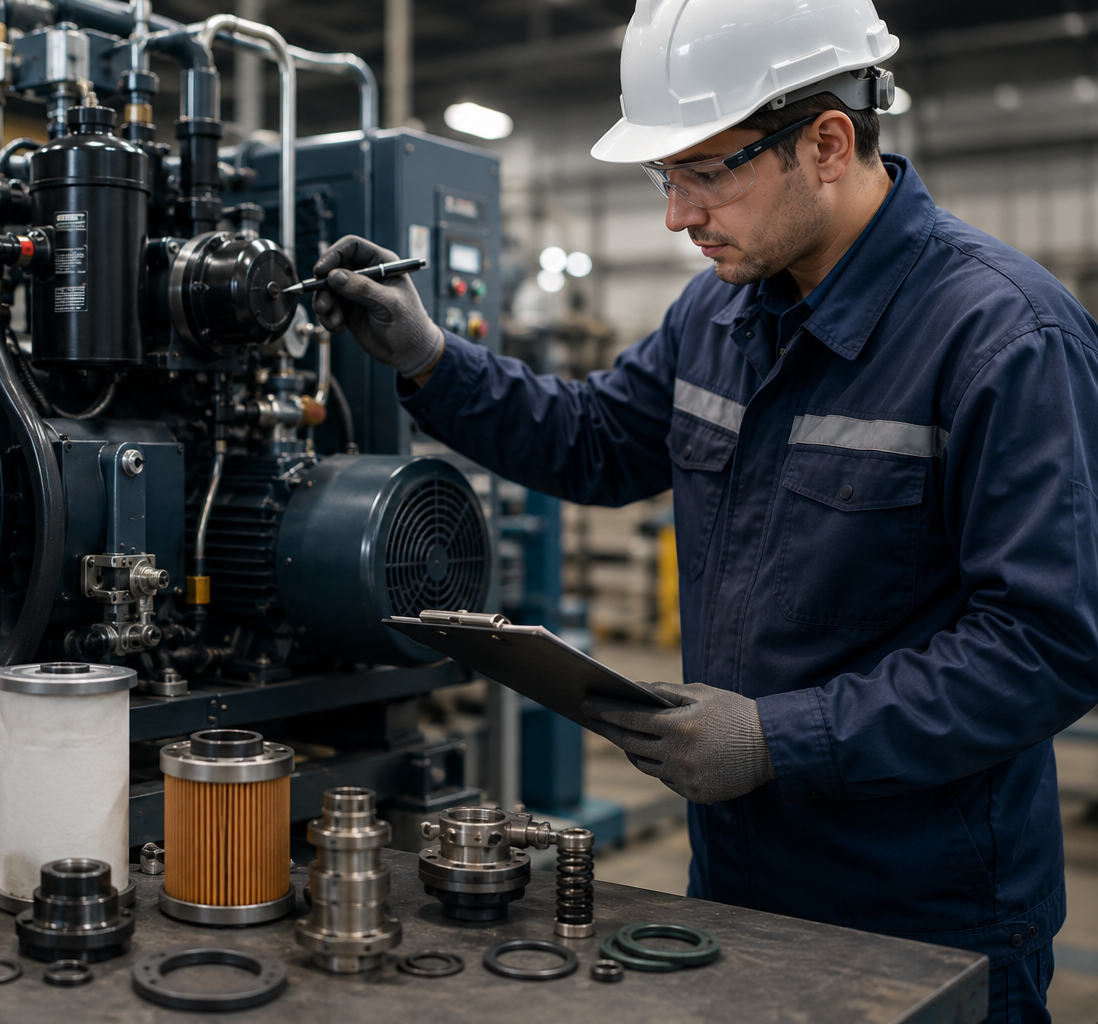
To ensure reliable compressor performance, inspect these components regularly:

Timely replacement of worn components helps prevent major equipment failures and improves overall system efficiency.


Recommended Preventive Maintenance Schedule

ComponentInspection FrequencyReplacement Recommendation
Air FilterWeeklyEvery 2,000–4,000 operating hours or as recommended by the manufacturer
Oil FilterDuring every oil changeReplace according to compressor service schedule
Air Oil SeparatorMonthlyReplace based on operating hours and pressure differential
Compressor ValvesEvery 3–6 monthsReplace if signs of wear or leakage are found
Seals & GasketsDuring scheduled maintenanceReplace whenever leakage or damage is detected

Note: Maintenance intervals may vary depending on the compressor model, operating environment, and manufacturer’s recommendations.


Warning Signs Your Air Compressor Needs Maintenance

Don’t wait until your compressor stops working completely.

Some common signs that indicate maintenance is required include:

  • Reduced air pressure
  • Higher electricity consumption
  • Unusual vibration or noise
  • Oil leakage
  • Frequent compressor shutdowns
  • High operating temperature
  • Slow pressure build-up

Addressing these warning signs early can help avoid unexpected downtime and expensive repairs.


Best Practices for Air Compressor Preventive Maintenance

Following a regular maintenance routine helps keep your compressor performing at its best.

Recommended practices include:

  • Inspect and clean air filters regularly.
  • Change compressor oil according to the service schedule.
  • Replace oil filters and oil separators at recommended intervals.
  • Inspect valves, seals, and gaskets for wear or leakage.
  • Monitor operating pressure and temperature.
  • Check for compressed air leaks.
  • Maintain accurate service and maintenance records.

A disciplined maintenance program improves reliability and supports long-term operational efficiency.


Expert Tip from Aeroflon Engineers Pvt. Ltd.

Based on our experience working with industrial customers, one of the most common causes of compressor performance issues is delayed replacement of wear components such as air filters and oil separators.

These parts may appear to be in good condition, but over time they become less effective, increasing energy consumption and placing additional stress on the compressor.

Replacing these components at the recommended intervals helps maintain consistent airflow, improves energy efficiency, and protects critical compressor parts from unnecessary wear.


How Aeroflon Engineers Pvt. Ltd. Supports Your Maintenance Needs

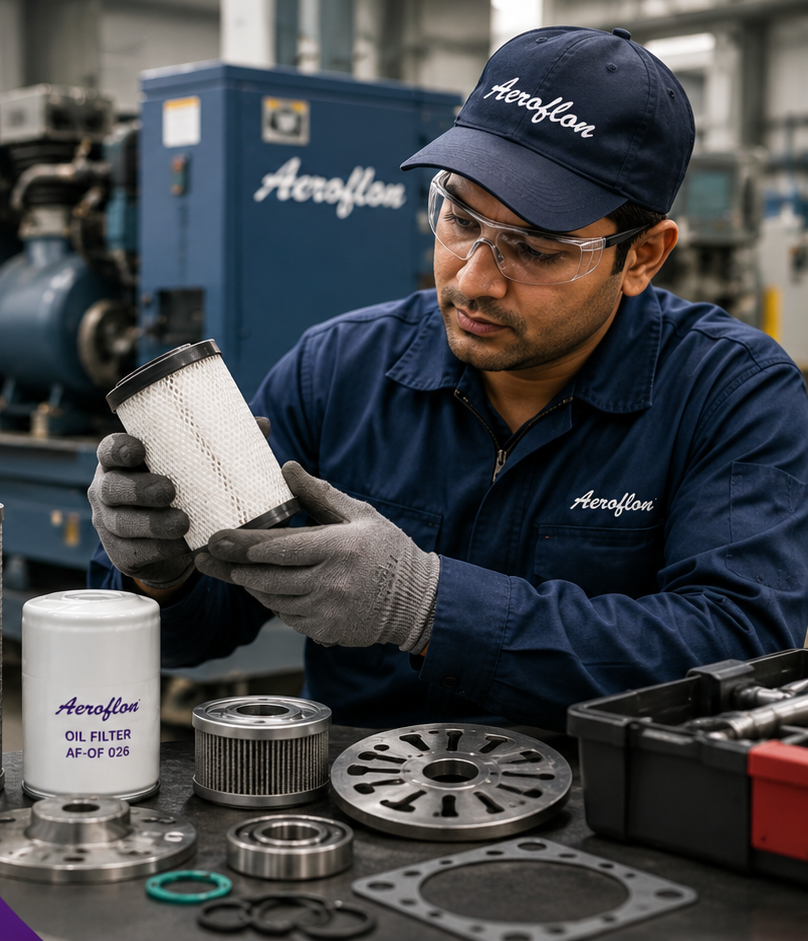
At Aeroflon Engineers Pvt. Ltd., we supply high-quality OEM-compatible air compressor spare parts designed to deliver reliable performance across a wide range of industrial applications.

Our product range includes air filters, oil filters, oil separators, valves, seals, gaskets, bearings, and other essential compressor components compatible with leading compressor brands.

In addition to supplying quality spare parts, our experienced team provides technical guidance to help customers select the right components based on their compressor model, operating conditions, and maintenance requirements.


Conclusion

Preventive maintenance is one of the smartest investments you can make to improve the efficiency, reliability, and lifespan of your air compressor system.

Regular inspections and timely replacement of essential spare parts help reduce downtime, lower maintenance costs, improve energy efficiency, and keep industrial operations running smoothly.

At Aeroflon Engineers Pvt. Ltd., we are committed to supporting industries with high-quality OEM-compatible air compressor spare parts and expert technical assistance.

Need help selecting the right compressor spare parts for your equipment? Contact Aeroflon Engineers Pvt. Ltd. today to find the right solution for your industrial maintenance needs.


Frequently Asked Questions (FAQs)

1. How often should an air compressor be serviced?

The service interval depends on the compressor model, operating hours, and working environment. Always follow the manufacturer’s maintenance recommendations.

2. Which air compressor spare parts require regular replacement?

The most commonly replaced parts include air filters, oil filters, oil separators, valves, seals, gaskets, and bearings.

3. Why is preventive maintenance important for industrial air compressors?

Preventive maintenance helps reduce unexpected breakdowns, improve energy efficiency, lower repair costs, extend equipment life, and maintain reliable compressor performance.

4. Can preventive maintenance reduce electricity costs?

Yes. Replacing clogged filters, worn separators, and leaking components helps the compressor operate more efficiently, reducing unnecessary energy consumption.

5. Where can I buy high-quality OEM-compatible air compressor spare parts?

Choose a trusted supplier that offers quality-tested OEM-compatible spare parts along with technical support to ensure reliable compressor performance.

How to Choose the Right Air Compressor Spare Parts

Introduction

Air compressors are essential for keeping industrial operations running efficiently. Whether you’re in manufacturing, pharmaceuticals, food processing, automotive, or packaging, your compressed air system depends on reliable components to perform consistently.

Over time, even the most durable compressor parts wear out due to continuous operation. Replacing them with the right air compressor spare parts is essential to maintain performance, reduce unexpected breakdowns, and extend the life of your equipment.

However, not all spare parts offer the same level of quality or compatibility. Choosing the wrong replacement can lead to higher maintenance costs, reduced efficiency, and costly production downtime. In this guide, we’ll explain the key factors to consider when selecting air compressor spare parts for your industrial applications.


Why Choosing the Right Air Compressor Spare Parts Matters

Every air compressor is made up of precision-engineered components such as filters, valves, oil separators, seals, bearings, and gaskets. Each part plays a specific role in maintaining air pressure, system efficiency, and reliable operation.

When one component begins to wear out, it can affect the performance of the entire compressed air system. Using the correct replacement part helps ensure:

  • Consistent compressor performance
  • Improved energy efficiency
  • Reduced equipment downtime
  • Longer service life
  • Lower maintenance costs

Investing in quality spare parts today can help prevent expensive repairs in the future.


Key Factors to Consider When Choosing Air Compressor Spare Parts

1. Check Compressor Model Compatibility

Before purchasing any replacement part, confirm that it is designed for your specific compressor make and model. Different manufacturers use different designs and specifications, so compatibility is essential for proper performance.

Using an incompatible component can reduce efficiency and may even damage other parts of the compressor.


2. Choose OEM or High-Quality OEM-Compatible Parts

Original Equipment Manufacturer (OEM) parts are designed to meet the compressor’s original performance standards. High-quality OEM-compatible spare parts can also provide reliable performance when sourced from a trusted supplier.

Choosing quality components helps maintain system reliability while reducing the risk of premature failures.


3. Consider Material Quality

Industrial air compressors operate under demanding conditions, including high pressure, elevated temperatures, and continuous operation.

Look for spare parts manufactured from durable, high-quality materials that can withstand these operating conditions. Better material quality often means improved durability and a longer service life.


4. Buy from a Reliable Supplier

Selecting the right supplier is just as important as choosing the right product.

A trusted supplier can provide:

  • Consistent product quality
  • Technical guidance
  • Reliable product availability
  • Prompt delivery
  • After-sales support

Working with an experienced supplier helps minimize downtime and ensures you receive the correct parts for your equipment.


5. Consider Your Industry Requirements

Every industry has different operating conditions and air quality requirements.

For example:

  • Pharmaceutical and food processing industries require cleaner compressed air.
  • Manufacturing facilities may prioritize durability for continuous operation.
  • Automotive industries often require components capable of handling higher workloads.

Choosing spare parts that match your application helps improve both efficiency and equipment reliability.


Common Mistakes to Avoid

Many compressor failures can be traced back to poor spare part selection or delayed maintenance. Some of the most common mistakes include:

  • Purchasing low-quality or unverified spare parts
  • Ignoring the compressor manufacturer’s specifications
  • Delaying replacement until a complete failure occurs
  • Skipping routine maintenance inspections
  • Selecting parts based only on price instead of quality

Avoiding these mistakes can significantly improve the performance and lifespan of your compressed air system.


Signs It’s Time to Replace Compressor Spare Parts

Regular inspections can help identify worn components before they lead to major failures.

Watch for signs such as:

  • Reduced air pressure
  • Higher energy consumption
  • Unusual vibration or noise
  • Oil carryover
  • Frequent system shutdowns
  • Reduced compressor efficiency

Replacing worn parts at the right time helps prevent costly production interruptions.


The Importance of Preventive Maintenance

Waiting for a component to fail is rarely the most cost-effective maintenance strategy.

A preventive maintenance program allows you to identify wear early and replace critical components before they cause unexpected downtime.

Regularly inspect parts such as:

  • Air filters
  • Oil separators
  • Compressor valves
  • Seals and gaskets
  • Bearings

Routine maintenance not only improves compressor performance but also helps reduce long-term operating costs.


Why Choose Aeroflon Engineers Pvt. Ltd.?

At Aeroflon Engineers Pvt. Ltd., we understand the importance of reliable industrial equipment. We provide high-quality OEM-compatible air compressor spare parts designed to deliver dependable performance across a wide range of industrial applications.

Our team also offers technical guidance to help customers select the right components based on their compressor model, operating conditions, and maintenance requirements. Our focus is to help industries improve system reliability, reduce downtime, and maintain efficient operations.


Conclusion

Choosing the right air compressor spare parts is more than a routine maintenance decision—it’s an investment in your equipment’s reliability, efficiency, and long-term performance.

By selecting compatible, high-quality components and following a preventive maintenance schedule, businesses can reduce downtime, lower operating costs, and extend the life of their air compressor systems.

If you’re looking for reliable OEM-compatible air compressor spare parts or expert technical guidance, Aeroflon Engineers Pvt. Ltd. is committed to helping you keep your operations running smoothly.